
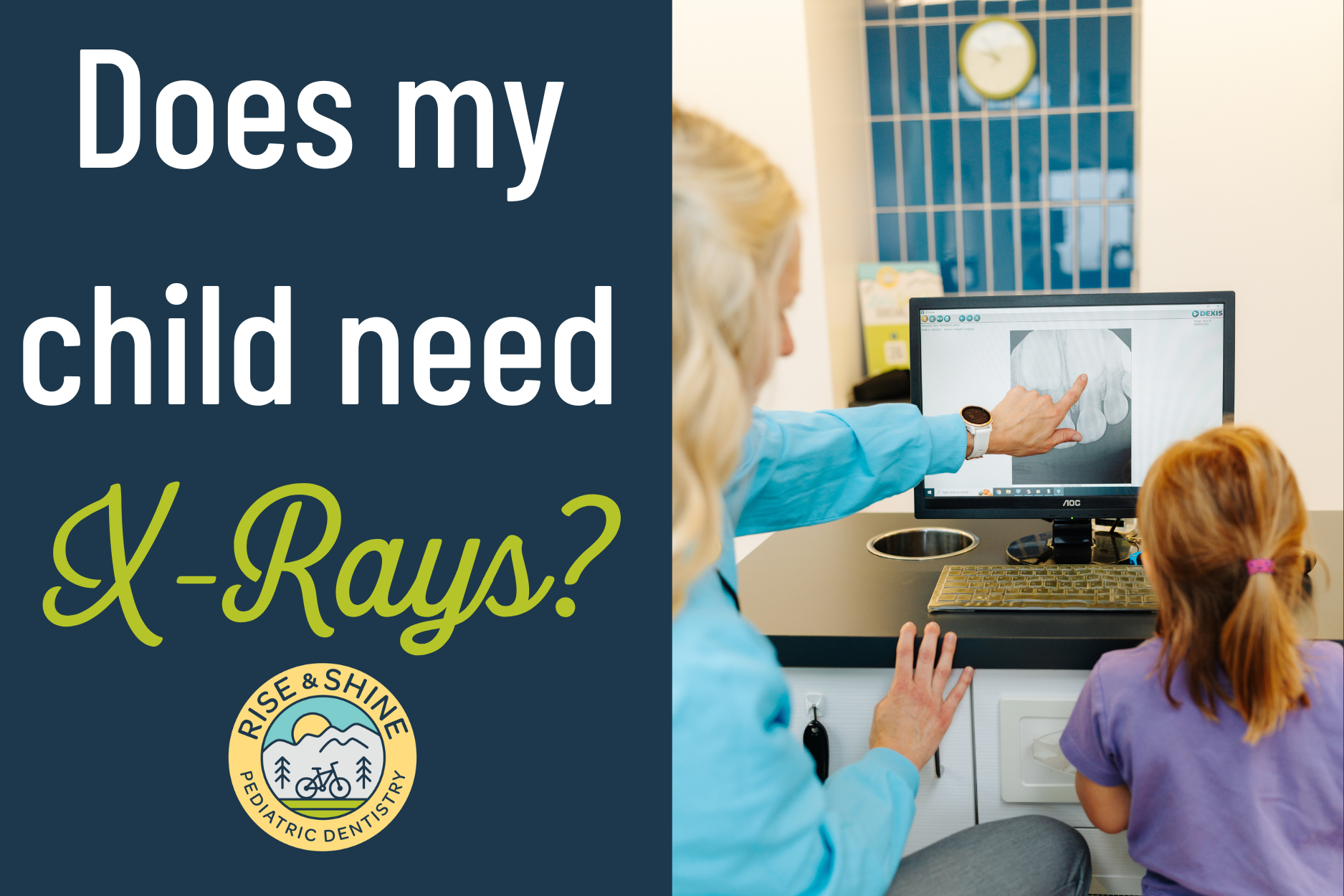
Dr. Villasenor discusses when X-rays are beneficial for your child
How do I know if my child needs X-rays?
Dr. Villasenor and the team at Rise and Shine Pediatric Dentistry believe that each child deserves a personalized approach to dental care. We extend this same philosophy when determining what age is appropriate to introduce digital radiographs as part of a thorough dental exam. Our team follows the ALARA principle (as low as reasonably achievable) and follows guidelines of the American Academy of Pediatric Dentistry when recommending the frequency and type of images indicated. Factors such as a child’s natural spacing between teeth, risk for cavities, history of dental trauma, or previous concerns impact the indication for the frequency and type of radiographs recommended.
Radiographs are an important piece of a comprehensive oral health exam, as Dr. Villasenor needs to evaluate growth and development of the jaws and teeth beyond what is visible to the eye. Rise and Shine Pediatric Dentistry uses all digital images and specific devices such as the AiRay Pro that limit the amount of exposure needed to accomplish a thorough exam.
What type of X-rays for children do we recommend?
- We typically first take occlusal images of the upper and lower front teeth. We use these to evaluate permanent teeth development in these areas, usually around age 3-4. These images verify that all teeth are present, rule out missing or extra teeth, and demonstrate if all teeth are on the correct path. If any variation from ideal is noted, Dr. Villasenor will discuss the appropriate intervention and interval for monitoring going forward.
- Dental radiographs also verify health of the teeth in areas where they contact each other closely, especially between back molars. Primary molars (baby teeth) are often tight together and are prone to in-between-the-teeth cavities. Bitewing dental radiographs can catch cavity prone areas early, when more conservative treatment options are available.
- We take Panoramic radiographs around the time of the eruption of the first permanent tooth. Then, they are taken periodically to review growth and development of the jaws and transition to permanent dentition. We also use these to view developing third molars (wisdom teeth).
- We use Periapical images to: check a close up area following trauma, evaluate the eruption path of a specific tooth, or rule out infection on a tooth with a deep cavity.
Request an appointment with Dr. Villasenor today to see if your child would benefit from X-rays as part of their thorough dental exam!